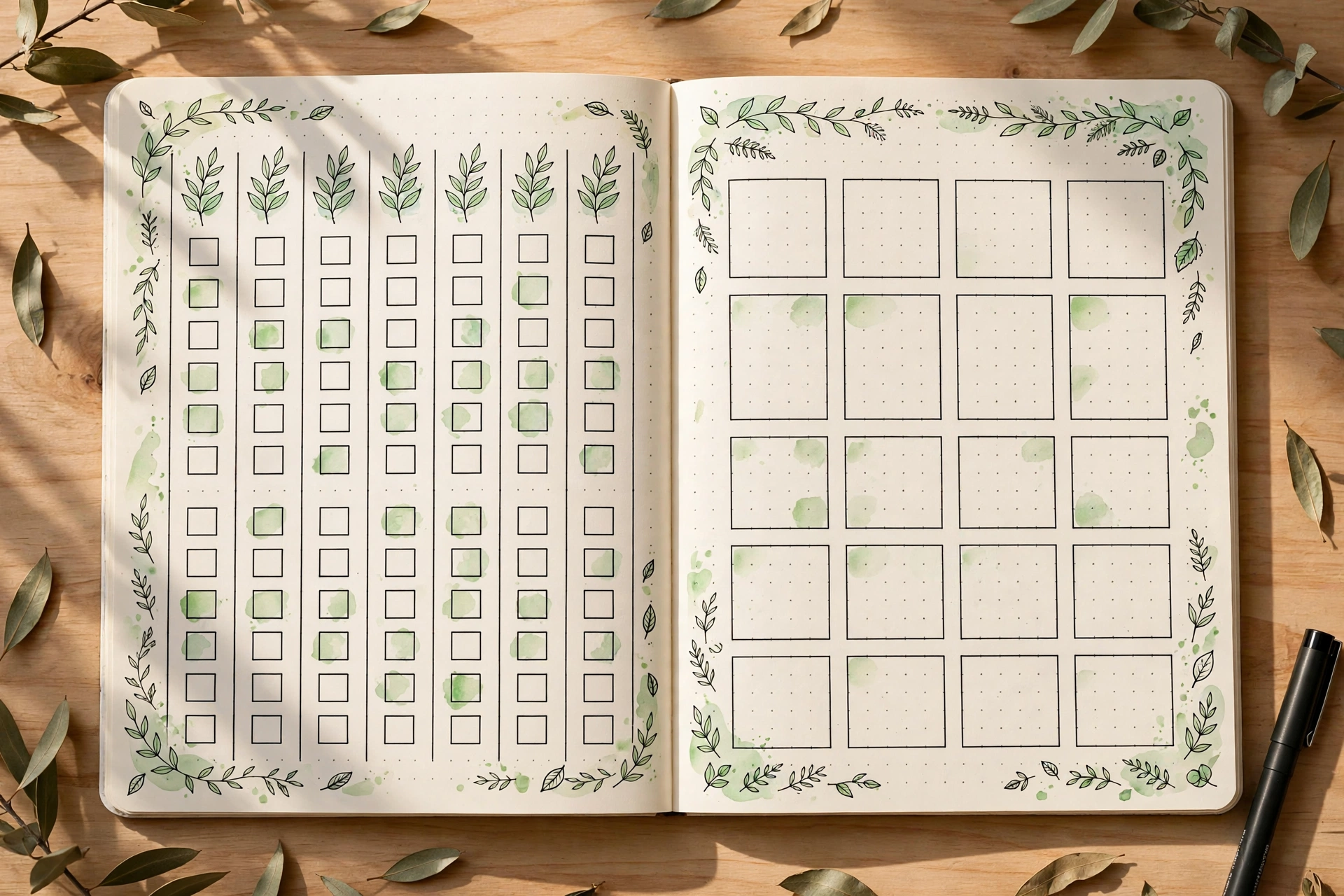
The classic grid
Habits down the left, days 1–31 across the top. Most readable, easiest to draw with a ruler, and the one most people settle on. Best for 3–6 habits.
Six bullet journal habit tracker designs that actually get used, how to set one up in a dot grid notebook, the supplies you genuinely need — and the printable shortcut for when redrawing it every month gets old.
Written & reviewed by Ahmad Hussain · August 2026
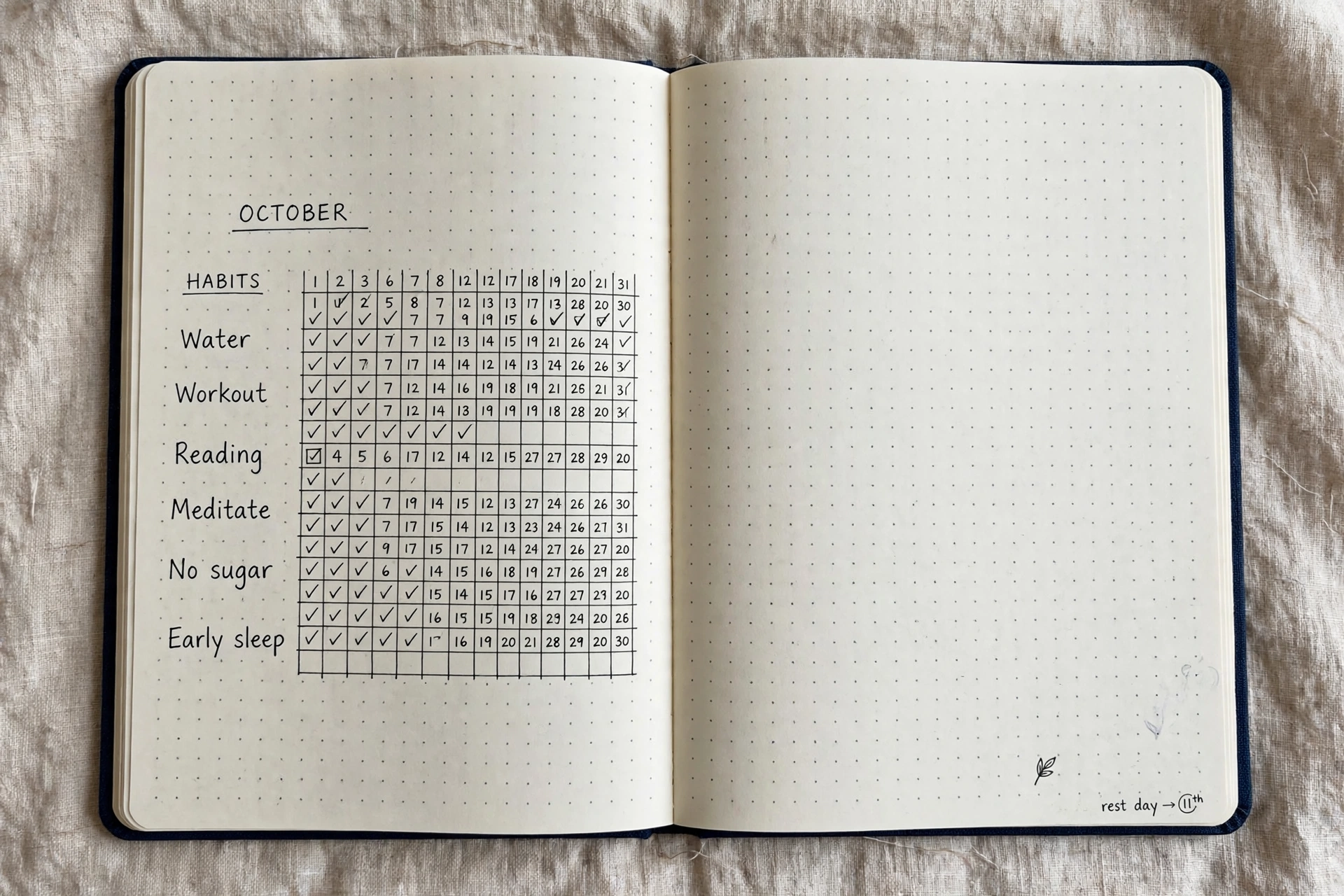
A hand-drawn grid in a notebook where you mark off habits as you complete them.
A habit tracker bullet journal spread is part of the wider bullet journal system, but you don't need the rest of that system to benefit from the tracker. A dot grid notebook, a pen and a ruler is the whole requirement.
The appeal is that you draw it yourself, so it fits your notebook, your habits and your handwriting. The drawback is the same thing — you have to draw it, every month, before you can use it. That's the trade-off this guide keeps coming back to.
Almost every bullet journal habit tracker you'll see online is a variation of one of these six. Here are the first three.
Habits down the left, days 1–31 across the top. Most readable, easiest to draw with a ruler, and the one most people settle on. Best for 3–6 habits.
One small month-shaped calendar per habit. Because each gets its own calendar, you can see gaps the grid hides. Best for 2–4 habits where the pattern of misses matters.
Concentric rings, one per habit, divided into 31 segments. The most decorative option and by far the most shared online — but slower to read at a glance.
And who each one is actually for.
Each habit is a flower; each petal is a day. The flower blooms over the month. Same strengths and weaknesses as the mandala — lovely to look at, slower to read.
A single long row of boxes for one habit only. There's nowhere to hide: the chain is either unbroken or it isn't. Best for one keystone habit you're serious about.
A normal grid with an extra row where you colour a mood each day. Shows you patterns, not causes — treat it as a prompt for reflection, not a diagnosis.
Six steps to set up a bullet journal habit tracker, in order. Do them before the month starts.
This decides everything else. Three to five is the practical maximum for a hand-drawn month.
A standard A5 dot grid gives roughly 31–38 columns across a spread — enough for a month at one square per day.
Draw the frame in pencil, check the spacing, then go over it in fineliner. Erase the guides afterwards.
Keep them to one or two words — "Water", "Read", "Move" — or the left column eats your grid.
Pick one colour per habit and keep it consistent, so you can compare months at a glance.
If you're using symbols rather than colours, leave a small key in the corner or you'll forget by week three.
Drawing next month's tracker after the month starts means you've already lost days. Do it in advance.
You need very little to start a bullet journal habit tracker. The elaborate supply lists you see online are a hobby in themselves — this is the real list.
Keep the creative part — colours, doodles, headers, washi tape — and skip the ruler work. Print at notebook size and glue it in.
Both work. They fail for different reasons.
Hand-drawing is enjoyable and fully customisable. It's also the most common reason a bullet journal habit tracker gets abandoned: at the end of a busy month, redrawing the whole grid is a chore, so it doesn't get done, and the habit quietly goes with it.
The middle path a lot of people land on is printing the grid and decorating it by hand. You keep the part that's fun and skip the part that's admin. Print it at the size of your notebook page and glue or tape it in.
It also means a missed month costs you nothing. You print a fresh sheet in seconds instead of facing an hour of setup you don't have time for.
Three to five for a hand-drawn bullet journal habit tracker. Past that the boxes get too small to fill in comfortably and the setup takes longer than most people will keep doing.
A5 dot grid is the standard for a reason — it gives roughly 31–38 columns across a two-page spread, which is exactly a month at one square per day.
Yes, and it's a common setup. Print at your notebook's page size, trim, then glue or tape it in and decorate around it.
Leave it. A visibly imperfect bullet journal habit tracker you keep using beats a perfect one you redraw three times and then abandon.
You can, and it's useful for spotting patterns over a month. Just remember it shows correlation, not cause.
For choosing what goes in the rows, see the 50 habits to track list — seven categories and the rule for picking habits you'll actually tick.
For picking the grid size, daily vs weekly vs monthly compares the three layouts. And how to build a habit covers what to do when a streak breaks — which matters more than the design of the sheet.
Everything else worth knowing about habit trackers.
Seven categories of habit ideas, and the one rule that decides which belong on a tracker.
📅Three layouts, three jobs. Which grid suits which habit, and how to choose fast.
🎯Why habits fail, the five fixes that work, and what to do when a streak breaks.
Make a free printable habit tracker in about a minute.
Open the habit tracker →A free habit tracker printable maker. Design it, print it, tick it — no account, no cost.
TrackTheHabit uses cookies for basic site function, analytics and advertising. By continuing you agree to our Terms and Privacy Policy.
Save it for one-tap access to your habit tracker — no app store, no download.
📱 Tap the Share button in your browser bar, scroll down, then choose “Add to Home Screen”.